Introduction to google seo and Why It Matters
In today’s digital world, mastering google seo is no longer optional, it’s essential. Whether you’re running a blog, an online store, or a business website, your visibility on search engines determines your success.
Google processes billions of searches daily. If your site isn’t optimized, you’re missing out on valuable organic traffic. That’s where SEO comes in, it helps your content appear in front of the right audience at the right time.
What is Google seo?
google seo refers to the process of optimizing your website to rank higher on Google’s search engine results pages (SERPs). It involves improving various elements such as:
- Content quality
- Keywords
- Technical performance
- Backlinks
- User experience
The goal? Increase search engine visibility and drive more targeted visitors.
Importance of Search Engine Visibility
Higher rankings mean:
- More clicks
- Better brand credibility
- Increased conversions
In simple terms, better visibility = more business opportunities.
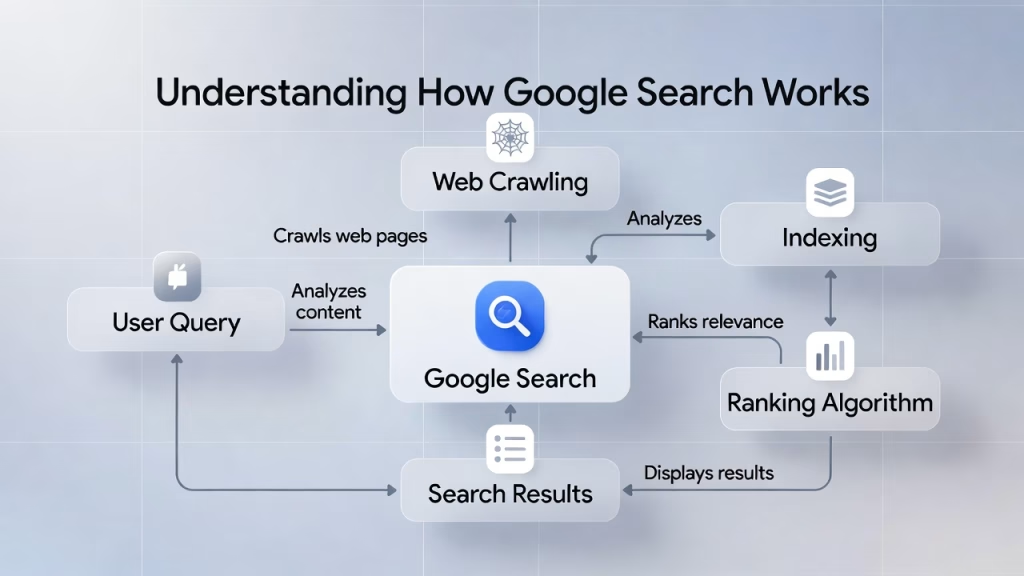
Understanding How Google Search Works
To succeed in google seo, you must first understand how Google operates.
Crawling and Indexing Explained
Google uses bots (called crawlers) to scan websites. This process includes:
- Crawling: Discovering new pages
- Indexing: Storing and organizing content
If your pages aren’t indexed, they won’t appear in search results.
Role of Google Algorithms
Google’s algorithms evaluate hundreds of factors, including:
- Content relevance
- Page speed
- Backlinks
- Mobile usability
These algorithms constantly evolve, making SEO startegy an ongoing process.

Keyword Research: The Foundation of google seo
Without proper keyword research, your SEO efforts won’t succeed.
Finding the Right Keywords
Focus on:
- High search volume
- Low competition
- Relevance to your niche
Use a mix of short-tail and long-tail keywords.
Understanding Search Intent
Search intent is the “why” behind a query. It includes:
- Informational
- Navigational
- Transactional
Matching content with intent improves rankings significantly.
Tools for Keyword Research
Popular tools include:
- Google Keyword Planner
- Ahrefs
- SEMrush
On-Page Optimization Techniques
On-page SEO ensures your content is properly optimized.
Optimizing Title Tags and Meta Descriptions
Your title tags and meta descriptions should:
- Include your main keyword
- Be compelling and clear
- Stay within character limits
Content Quality and Structure
Google prioritizes content quality. Ensure your content is:
- Original
- Informative
- Easy to read
Use headings (H2, H3) and bullet points to improve readability.
Internal Linking Strategies
Internal links:
- Help search engines understand your site
- Improve navigation
- Boost page authority
Technical SEO Essentials
Technical SEO ensures your website performs well behind the scenes.
Page Speed and Core Web Vitals
Fast-loading pages improve rankings and user experience.
Focus on:
- Image optimization
- Caching
- Clean code
Core Web Vitals measure:
- Loading speed
- Interactivity
- Visual stability
Mobile Optimization Importance
Most users browse on mobile devices. Google uses mobile-first indexing, meaning:
Your mobile version matters more than desktop.
Schema Markup and Structured Data
Schema markup helps search engines understand your content better and can lead to:
- Rich snippets
- Better SERP visibility
Off-Page SEO and Link Building
Off-page SEO focuses on external factors.
Importance of Backlinks
Backlinks act as votes of trust. High-quality backlinks:
- Improve authority
- Boost rankings
- Increase credibility
Effective Link Building Strategies
Try:
- Guest blogging
- Content outreach
- Broken link building
Enhancing User Experience for Better Rankings
Google prioritizes user satisfaction.
Site Navigation and Design
A well-structured site:
- Keeps users engaged
- Reduces confusion
Reducing Bounce Rate
Improve engagement by:
- Writing engaging content
- Using visuals
- Ensuring fast load times

SERP Features and Visibility
In modern google seo, ranking #1 is no longer the only goal. Today, dominating the Search Engine Results Page (SERP) means capturing attention through various enhanced elements known as SERP features. These features can significantly improve your search engine visibility, increase click-through rates (CTR), and drive more organic traffic sometimes even more than the traditional top ranking.
Understanding how SERP features work and how to optimize for them is essential if you want to stay competitive in today’s SEO landscape.
What Are SERP Features?
SERP features are special elements on Google search results that go beyond standard blue links. They are designed to provide users with quick, relevant answers directly on the results page.
Common Types of SERP Features
- Featured snippets (answer boxes)
- People Also Ask (PAA) sections
- Knowledge panels
- Image packs
- Video results
- Local packs (maps and listings)
- FAQ rich results
- Reviews and star ratings
These features enhance user experience and often appear at the top of the page, increasing visibility.
Why SERP Features Matter in google seo
SERP features can dramatically impact your SEO performance.
Key Benefits
- Increase SERP visibility even without ranking #1
- Improve click-through rates
- Build brand authority and trust
- Capture more screen space on search results
Important Insight: A featured snippet can outperform the #1 organic result in terms of visibility and clicks.
Featured Snippets: The #1 Visibility Opportunity
Featured snippets are one of the most valuable SERP features. They appear at the top of search results and provide direct answers to user queries.
Types of Featured Snippets
- Paragraph snippets
- List snippets (numbered or bullet points)
- Table snippets
How to Optimize for Featured Snippets?
- Answer questions clearly and concisely
- Use bullet points and numbered lists
- Structure content with proper headings
- Target question-based keywords
Example: Instead of writing long paragraphs, provide a short, direct answer followed by detailed explanation.
People Also Ask (PAA) Optimization
The People Also Ask box contains related questions that users frequently search for.
Why It Matters?
- Expands your visibility across multiple queries
- Helps capture additional traffic
- Improves topical authority
Optimization Tips
- Include FAQ sections in your content
- Use question-based headings (H2, H3)
- Provide clear and direct answers
This strategy aligns perfectly with search intent and boosts your chances of appearing in multiple SERP positions.
Rich Results and Schema Markup
Rich results enhance your listings with additional information such as:
- Star ratings
- FAQs
- Product details
- Event information
These are powered by schema markup, a form of structured data.
Benefits of Schema Markup
- Improves click-through rates
- Enhances search appearance
- Helps search engines understand your content
Common Schema Types
- FAQ schema
- Article schema
- Review schema
- Product schema
Pro Tip: Implementing schema markup is a powerful technical seo strategy that increases your chances of appearing in rich results.
Image and Video SEO for SERP Features
Visual content is becoming increasingly important in search results.
Image Optimization
- Use descriptive file names
- Add alt text
- Compress images for faster loading
Video Optimization
- Use keyword-rich titles and descriptions
- Add timestamps
- Include transcripts
Videos often appear in SERPs and can significantly boost engagement and visibility.
Local SEO and Map Pack Visibility
For businesses targeting local audiences, the local pack is a critical SERP feature.
What is the Local Pack?
It’s a map-based listing showing:
- Business names
- Ratings
- Locations
How to Optimize for Local SEO?
- Create and optimize Google Business Profile
- Use location-based keywords
- Collect customer reviews
Local SEO improves visibility for location-specific searches and drives targeted traffic.
Zero-Click Searches and Their Impact
Many SERP features result in zero-click searches, where users get answers directly from Google without clicking any link.
Examples
- Featured snippets
- Knowledge panels
- Instant answers
How to Benefit from Zero-Click Searches?
- Provide concise, valuable answers
- Build brand recognition
- Optimize for visibility, not just clicks
Even without clicks, appearing in these features strengthens your authority.
Improving SERP Visibility with Content Structure
Content structure plays a key role in winning SERP features.
Best Practices
- Use clear headings and subheadings
- Add bullet points and lists
- Include tables for data
- Answer questions directly
Structured content is easier for Google to extract and display in SERP features.
Tracking SERP Feature Performance
To improve your strategy, you need to track your performance.
Key Metrics
- Featured snippet rankings
- CTR (Click-Through Rate)
- Impressions
- Keyword positions
Use tools like:
- Google Search Console
- SEO platforms (Ahrefs, SEMrush)
Continuous Optimization
- Update content regularly
- Improve formatting
- Target new SERP opportunities
SEO is dynamic, and ongoing optimization is essential.
Final Thoughts on SERP Features and Visibility
In today’s competitive landscape, mastering SERP features is a game-changer for google seo. It’s not just about ranking, it’s about owning as much space as possible on the search results page.
To succeed:
- Optimize for featured snippets
- Use structured data (schema markup)
- Focus on content clarity and structure
- Align with user intent
By leveraging SERP features effectively, you can significantly boost your search engine visibility, attract more organic traffic, and establish authority in your niche.
Content Marketing and google seo
Content marketing plays a central role in the success of any google seo strategy. Without high-quality, relevant, and engaging content, it becomes nearly impossible to achieve strong search rankings or generate consistent organic traffic. In fact, content is what connects your website to users, it answers their questions, solves their problems, and builds trust.
In today’s SEO landscape, Google prioritizes content that is helpful, user-focused, and aligned with search intent. This means your content must go beyond basic keyword usage and deliver real value.
Why Content Marketing is Essential for google seo?
Content marketing and google seo are deeply interconnected. SEO brings users to your site, while content keeps them engaged and converts them into loyal visitors or customers.
Key Benefits of Content Marketing in SEO
- Improves search engine visibility
- Increases organic traffic
- Enhances user engagement
- Builds authority and trust
- Supports link building efforts
High-quality content also attracts backlinks, which are one of the most important ranking factors.
Bottom Line: Without strong content, even the best SEO strategy will struggle to succeed.
Creating High-Quality, SEO-Optimized Content
Content quality is one of the most critical ranking factors in google seo. Google evaluates content based on relevance, depth, and usefulness.
Characteristics of High-Quality Content
- Original and unique
- Well-researched and accurate
- Easy to read and structured
- Provides clear answers to user queries
Your content should naturally include semantic keywords such as:
- Keyword research
- Technical SEO
- User experience
- SERP features
Best Practices
- Use clear headings (H2, H3, H4)
- Break content into short paragraphs
- Add bullet points and lists
- Include examples and actionable tips
The goal is to make your content both informative and easy to consume.
Aligning Content with Search Intent
Understanding search intent is essential for effective content marketing.
There are four main types of intent:
- Informational – Users want to learn something
- Navigational – Users are looking for a specific site
- Transactional – Users want to take action (buy, sign up)
- Commercial – Users are comparing options
How to Optimize for Search Intent?
- Analyze top-ranking pages
- Match your content format (guide, list, review)
- Answer user questions clearly and directly
Pro Tip: Content that perfectly matches intent has a much higher chance of ranking on the first page.
Content Structure and On-Page SEO Integration
Even great content won’t perform well without proper structure and on-page optimization.
Key Elements to Optimize
- Title tags with main keywords
- Meta descriptions that attract clicks
- Proper use of headings (H1–H6)
- Internal linking to related pages
Why Structure Matters?
A well-structured article:
- Helps search engines understand your content
- Improves readability
- Enhances user experience
Good structure also increases your chances of appearing in SERP features like featured snippets.
Content Distribution and Promotion Strategies
Creating content is only half the job, promotion is equally important.
Effective Distribution Channels
- Social media platforms
- Email newsletters
- Online communities (forums, groups)
- Guest blogging
Promoting your content increases visibility and helps generate backlinks, boosting your SEO performance.
Content Updates and Evergreen Strategy
SEO is not static. Content must be updated regularly to maintain relevance.
Why Updating Content Matters?
- Keeps information accurate
- Improves rankings over time
- Signals freshness to Google
How to Update Content?
- Add new data and statistics
- Refresh keywords
- Improve readability and structure
Evergreen content, content that stays relevant over time can drive continuous organic traffic.
Using Content Clusters and Topic Authority
Google favors websites that demonstrate expertise in a specific topic.
What Are Content Clusters?
A content cluster includes:
- A main pillar page (broad topic)
- Multiple related articles (subtopics)
For example:
- Pillar: google seo
- Subtopics: keyword research, link building, technical SEO
Benefits of Content Clusters
- Improves internal linking
- Builds topical authority
- Enhances crawling and indexing
This strategy strengthens your overall search engine visibility.
Role of Visual Content in SEO
Visual elements enhance engagement and improve user experience.
Types of Visual Content
- Images
- Infographics
- Videos
- Charts
Optimization Tips
- Use descriptive alt text
- Compress images for faster loading
- Include relevant file names
Visual content can also help you rank in image and video search results, increasing your SERP visibility.
Measuring Content Performance
Tracking performance is crucial to improving your content strategy.
Key Metrics to Monitor
- Organic traffic
- Bounce rate
- Time on page
- Conversion rate
- Keyword rankings
Use tools like Google Analytics and Search Console to analyze performance.
How to Improve Based on Data?
- Identify high-performing content and replicate success
- Optimize underperforming pages
- Adjust keywords and structure
Data-driven content marketing leads to better SEO results.
Final Thoughts on Content Marketing and google seo
Content marketing is the driving force behind successful google seo. It’s not just about writing articles, it’s about delivering value, solving problems, and building trust with your audience.
To succeed:
- Focus on high-quality content
- Align with search intent
- Optimize structure and technical elements
- Promote and update your content regularly
When done right, content marketing can significantly boost your search rankings, increase organic traffic, and establish long-term authority in your niche.
Conducting a Technical Audit
A technical audit identifies issues affecting your SEO.
Identifying SEO Issues
Look for:
- Broken links
- Duplicate content
- Slow pages
Fixing Technical Errors
Regular audits ensure your site stays optimized and competitive.
Measuring SEO Performance
Tracking progress is crucial.
Tracking Organic Traffic
Use tools like:
- Google Analytics
- Google Search Console
Monitoring Search Rankings
Track keyword positions to evaluate your SEO success.
Common google seo Mistakes to Avoid
Even the most well-designed websites can struggle to rank if they fall into common SEO traps. While implementing the right strategies is important, avoiding critical mistakes in google seo is equally essential. These errors can harm your search rankings, reduce organic traffic, and negatively impact your overall search engine visibility.
Let’s explore these mistakes in depth so you can build a stronger, more effective SEO strategy.
Ignoring Search Intent
One of the biggest mistakes in google seo is focusing only on keywords without understanding search intent.
For example, if someone searches:
- “how to improve SEO,” they want a guide
- “best SEO tools,” they want recommendations
If your content doesn’t match the intent, users will leave quickly—and Google will notice.
How to Fix It?
- Analyze what users really want
- Study top-ranking pages
- Align your content with user expectations
Pro Tip: Always ask, “What problem is the user trying to solve?”
Keyword Stuffing Instead of Natural Usage
Overloading your content with keywords like google seo used to work—but now it does more harm than good.
Keyword stuffing leads to:
- Poor readability
- Lower user experience
- Potential ranking penalties
Better Approach
- Use keywords naturally
- Include semantic (related) keywords
- Focus on content clarity
Google prefers content that reads smoothly and provides value.
Poor Content Quality
Content is the backbone of SEO. Thin or low-quality content will not rank well, no matter how optimized your site is.
Common issues include:
- Duplicate content
- Lack of depth
- Outdated information
How to Improve Content Quality?
- Write detailed, helpful articles
- Update content regularly
- Use credible sources
High content quality directly improves engagement and rankings.
Neglecting Technical SEO
Ignoring technical seo can prevent your website from being properly crawled and indexed.
Common technical issues:
- Broken links
- Slow page speed
- Missing XML sitemap
- Crawl errors
Solution
Conduct regular technical audits to identify and fix issues affecting performance.
Remember: Even great content won’t rank if search engines can’t access it.
Slow Page Speed and Poor Core Web Vitals
Page speed is a crucial ranking factor. A slow website leads to:
- High bounce rates
- Poor user experience
- Lower rankings
Google’s Core Web Vitals measure performance and usability.
Fixing Speed Issues
- Compress images
- Minimize code
- Use caching
- Choose fast hosting
A faster site keeps users engaged and improves SEO performance.
Lack of Mobile Optimization
With mobile-first indexing, failing to optimize for mobile devices is a major mistake.
Problems include:
- Unresponsive design
- Hard-to-read text
- Slow mobile load times
Best Practices
- Use responsive design
- Optimize images and layout
- Test across devices
Mobile optimization is essential for modern google seo success.
Ignoring Meta Tags and Title Tags
Your title tags and meta descriptions are critical for both rankings and click-through rates.
Common mistakes:
- Missing tags
- Duplicate tags
- Poorly written descriptions
Optimization Tips
- Include your main keyword
- Keep titles clear and engaging
- Write compelling descriptions
These elements directly influence how users interact with your content on SERPs.
Weak Internal Linking Structure
Internal linking helps search engines understand your website structure and improves navigation.
Mistakes include:
- Not linking related pages
- Using poor anchor text
- Creating orphan pages
How to Improve Internal Linking?
- Link relevant content together
- Use descriptive anchor text
- Ensure all pages are accessible
A strong internal linking strategy boosts both SEO and user experience.
Building Low-Quality Backlinks
Not all backlinks are beneficial. Low-quality or spammy links can harm your rankings.
Bad practices:
- Buying links
- Using link farms
- Overusing exact-match anchor text
Better Link Building Strategy
- Focus on high-quality backlinks
- Use guest posting
- Build relationships in your niche
Effective link building improves authority and trust.
Ignoring User Experience (UX)
Google prioritizes websites that offer a great user experience.
Poor UX includes:
- Confusing navigation
- Too many ads
- Hard-to-read content
How to Improve UX?
- Simplify site structure
- Use clear headings
- Make content easy to scan
A better UX leads to longer visits and improved rankings.
Not Optimizing for SERP Features
Many websites ignore opportunities to appear in SERP features like:
- Featured snippets
- FAQs
- Rich results
How to Optimize?
- Use structured data (schema markup)
- Format content clearly
- Answer questions directly
This increases your SERP visibility and click-through rates.
Skipping Regular SEO Audits
SEO is not a one-time task. Failing to perform regular audits can lead to unnoticed issues.
What to Check?
- Broken links
- Indexing issues
- Page speed
- Keyword performance
Regular audits ensure your SEO strategy stays effective.
Overlooking Content Updates
Outdated content loses relevance over time.
Why Updates Matter?
- Keeps information accurate
- Improves rankings
- Signals freshness to Google
Refresh old articles with new data, keywords, and insights.
Targeting Too Many Keywords at Once
Trying to rank for too many keywords can dilute your focus.
Better Strategy
- Focus on one primary keyword
- Use related keywords naturally
- Build topic authority
This improves your chances of ranking higher.
Ignoring Analytics and Performance Data
Without tracking performance, you won’t know what’s working.
Tools to Use
- Google Analytics
- Google Search Console
Monitor:
- Traffic
- Rankings
- User behavior
Data-driven decisions lead to better SEO results.
Final Thoughts on Avoiding SEO Mistakes
Avoiding these common errors can significantly improve your google seo performance. Success comes from:
- Understanding user needs
- Maintaining high content quality
- Optimizing technical aspects
- Continuously improving your strategy
SEO is a long-term game. The fewer mistakes you make, the faster you’ll see results in search rankings and organic traffic.
Future Trends in Google Seo
The world of google seo is constantly evolving. What worked yesterday may not work tomorrow. As Google continues to refine its algorithms and improve user experience, staying ahead of emerging trends is essential for maintaining strong search rankings and consistent organic traffic.
In this section, we’ll explore the most important future trends shaping SEO and how you can prepare your strategy for long-term success.
AI and Machine Learning in Search Algorithms
Artificial Intelligence (AI) and machine learning are at the heart of modern google seo. Google is no longer just matching keywords, it is interpreting meaning, context, and user behavior at an advanced level. This shift is redefining how websites achieve strong search rankings and maintain long-term search engine visibility.
Let’s dive deeper into how AI is shaping the future of SEO and what it means for your strategy.
Evolution from Keywords to Contextual Understanding
In the past, SEO relied heavily on keyword placement. Today, Google uses AI systems to understand:
- The intent behind a search query
- The relationships between words (semantic SEO)
- The context of entire sentences and paragraphs
This means that simply inserting the keyword google seo multiple times is no longer effective. Instead, your content must:
- Address user problems clearly
- Provide complete, meaningful answers
- Use natural language
Key Insight: Google now ranks pages based on how well they satisfy search intent, not just keyword usage.
Role of AI Models Like RankBrain and Beyond
Google’s AI systems, such as RankBrain and newer deep learning models, continuously analyze how users interact with search results.
They evaluate signals like:
- Click-through rate (CTR)
- Bounce rate
- Time spent on page
- Engagement levels
If users quickly leave your page, Google assumes your content isn’t helpful.
What This Means for Optimization?
- Focus on engaging introductions
- Use clear formatting (headings, bullet points)
- Deliver value quickly
Content must hook the reader within seconds to improve performance.
Natural Language Processing (NLP) and Content Quality
Natural Language Processing (NLP) allows Google to understand human language more accurately than ever before.
This impacts:
- Content relevance
- Topic depth
- Keyword relationships
Instead of focusing on a single keyword, Google expects content to include related concepts such as:
- Technical SEO
- Link building
- User experience
- Content marketing
How to Optimize for NLP?
- Write naturally, like you’re speaking to a human
- Use synonyms and related phrases
- Cover topics in-depth rather than superficially
High content quality is now a major ranking factor driven by AI understanding.
Predictive Search and Personalization
AI enables Google to personalize search results based on:
- User location
- Search history
- Device type
- Behavior patterns
This means two users searching the same term may see different results.
SEO Implications
- Local SEO is becoming more important
- Personalization affects SERP visibility
- Content must target specific audiences
Action Tip: Tailor your content to your ideal audience instead of trying to rank for everyone.
AI-Generated Content vs Human Content
With the rise of AI writing tools, Google has become more focused on distinguishing between:
- Low-quality automated content
- High-value human-first content
Google does not penalize AI content directly—but it prioritizes:
- Original insights
- Real expertise
- Authentic experience
Best Practices
- Add personal insights and examples
- Avoid generic, repetitive content
- Focus on E-E-A-T principles
Your content should feel helpful, not robotic.
Automation in Technical SEO
AI is also transforming technical seo by automating complex processes such as:
- Site audits
- Error detection
- Crawling analysis
- Indexing optimization
Modern SEO tools now use machine learning to:
- Identify broken links
- Suggest improvements
- Monitor core web vitals
Benefits of AI in Technical SEO
- Saves time
- Improves accuracy
- Provides actionable insights
This allows marketers to focus more on strategy and less on manual work.
AI and Content Optimization Tools
AI-powered SEO tools can now:
- Suggest keyword variations
- Analyze competitors
- Optimize content structure
- Improve readability
These tools help enhance content marketing efforts and boost organic traffic.
How to Use Them Effectively?
- Use AI for research, not replacement
- Combine AI insights with human creativity
- Continuously update and improve content
Future Outlook: Fully AI-Driven Search Ecosystem
Looking ahead, AI will continue to shape every aspect of google seo, including:
- Voice and conversational search
- Visual search technologies
- Real-time content ranking adjustments
Search engines may eventually predict user needs before they even search.
How to Stay Ahead?
- Focus on user-first content
- Keep learning and adapting
- Monitor algorithm updates
- Invest in both content and technical optimization
Final Insight
AI and machine learning are not just trends, they are the foundation of the future of google seo. Success will depend on your ability to:
- Understand your audience
- Deliver real value
- Optimize for both humans and search engines
The more helpful and relevant your content is, the better it will perform in an AI-driven search landscape.
What This Means for SEO?
- Content must answer real user questions
- Keyword stuffing is no longer effective
- Natural language and clarity matter more than ever
Action Tip: Focus on creating helpful, human-first content that aligns with search intent rather than just inserting keywords.
Voice Search Optimization
Voice search is growing rapidly due to smart devices and mobile assistants.
People now search using conversational phrases like:
- “What is the best way to improve google seo?”
- “How can I boost my website traffic quickly?”
Optimization Strategies
- Use long-tail keywords
- Write in a natural, conversational tone
- Add FAQ sections (like this article does)
Voice searches often trigger SERP features like featured snippets, so optimizing for these is crucial.
Mobile-First Indexing and User Experience
Google has fully shifted to mobile-first indexing, meaning it primarily uses the mobile version of your website for ranking.
Key Focus Areas
- Responsive design
- Fast loading speeds
- Easy navigation
User experience (UX) is now a direct ranking factor. A poor mobile experience can hurt your search engine visibility.
Core Web Vitals and Page Experience Signals
Google’s Core Web Vitals are critical performance metrics that measure:
- Loading speed (Largest Contentful Paint)
- Interactivity (First Input Delay)
- Visual stability (Cumulative Layout Shift)
Why They Matter?
Websites that load quickly and provide smooth interactions rank higher and retain users longer.
Action Tip: Regularly monitor your site performance and fix issues affecting page speed and usability.
E-E-A-T: Experience, Expertise, Authority, Trustworthiness
Google increasingly values content that demonstrates:
- Real experience
- Expert knowledge
- Authority in a niche
- Trustworthiness
This is especially important for topics related to health, finance, and business.
How to Improve E-E-A-T?
- Add author bios
- Use credible sources
- Keep content accurate and updated
High-quality content marketing strategies will play a major role in future SEO success.
Search Intent and Semantic SEO
Google is getting better at understanding search intent and semantic relationships between words.
Instead of focusing on a single keyword like google seo, you should include related concepts such as:
- Technical SEO
- Link building
- Content quality
- SERP visibility
Best Practices
- Cover topics comprehensively
- Use LSI (related) keywords naturally
- Answer multiple user questions in one article
Visual and Video SEO Growth
Search results are becoming more visual. Google now includes:
- Videos
- Images
- Infographics
Optimizing visual content can boost your SERP visibility.
Optimization Tips
- Use descriptive file names
- Add alt text
- Optimize image size for faster loading
Video content, especially on platforms like YouTube, is becoming a powerful SEO tool.
Zero-Click Searches and SERP Features
Many users now get answers directly from Google without clicking a website. These are called zero-click searches.
Examples include:
- Featured snippets
- Knowledge panels
- Instant answers
How to Adapt?
- Structure content clearly
- Use bullet points and tables
- Answer questions directly
This increases your chances of appearing in top SERP features.
Automation and SEO Tools
Automation is simplifying SEO tasks like:
- Keyword tracking
- Technical audits
- Backlink analysis
Modern tools powered by AI help marketers make data-driven decisions faster.
Recommended Approach
Use tools to:
- Monitor performance
- Identify opportunities
- Fix technical issues efficiently
The Rise of Technical SEO Importance
As websites grow more complex, technical seo becomes more critical.
Future SEO success will depend on:
- Proper site architecture
- Clean URL structures
- Efficient crawling and indexing
Key Technical Areas
- XML sitemaps
- Robots.txt optimization
- Fixing crawl errors
A strong technical foundation ensures your content is discoverable and ranks effectively.
Final Thoughts on Future Trends
The future of google seo is all about user-first optimization. Google is becoming smarter, focusing on delivering the best possible experience to users.
To stay ahead:
- Prioritize content quality
- Improve user experience
- Stay updated with algorithm changes
- Invest in both technical and content strategies
SEO is not just about ranking anymore, it’s about delivering value.
FAQs About Google Seo
1. What is google seo in simple terms?
It’s the process of optimizing your website to rank higher on Google and attract more organic traffic.
2. How long does SEO take to work?
Typically, 3–6 months, depending on competition and strategy.
3. What are the most important ranking
Content quality, backlinks, page speed, and user experience.
4. Is technical SEO matter?
Yes, without technical SEO, your site may not be properly crawled or indexed.
5. How do backlinks help SEO?
They signal trust and authority to search engines.
6. Can I do SEO without tools?
Yes, but tools make the process faster and more accurate.
Conclusion
Mastering google seo is a powerful way to grow your online presence. By combining keyword research, content quality, technical optimization, and link building, you can significantly improve your search rankings and drive consistent organic traffic.
SEO isn’t a one-time effort—it’s an ongoing journey. Stay updated, keep optimizing, and success will follow.