Running an online store today is more competitive than ever. Millions of businesses are fighting for visibility in search engines, and only those with strong SEO strategies stand out. This is where freelance seo e-commerce specialists come in.
A freelance SEO expert helps online stores increase visibility, attract targeted traffic, and improve conversions through strategic optimization. From keyword research to technical audits, freelancers provide specialized skills that many businesses cannot maintain in-house.
Effective freelance seo e-commerce strategies focus on improving product pages, category structures, technical performance, and content marketing. When done correctly, SEO can become the most powerful traffic source for an online store.
In this guide, we’ll explore proven SEO techniques freelancers use to grow e-commerce businesses and increase online revenue.
Understanding Freelance SEO E-Commerce
E-commerce SEO is different from traditional SEO. It focuses heavily on product pages, category organization, user experience, and purchase intent.
What Freelance SEO Means for Online Stores?
A freelance SEO professional works independently with online businesses to improve their search rankings. Instead of hiring a full-time employee, companies hire freelancers for specialized tasks such as:
- Keyword research
- Product optimization
- Technical audits
- Link building
- Analytics tracking
Freelancers often bring experience from working across multiple industries. This gives them insights into strategies that work for various e-commerce platforms.
Why E-Commerce SEO Requires Specialized Expertise?
Online stores have unique challenges:
- Thousands of product pages
- Duplicate content issues
- Complex site architecture
- Frequent inventory changes
- High competition
Freelance experts perform technical audits, resolve crawl errors, and improve internal linking to ensure search engines properly index the site.
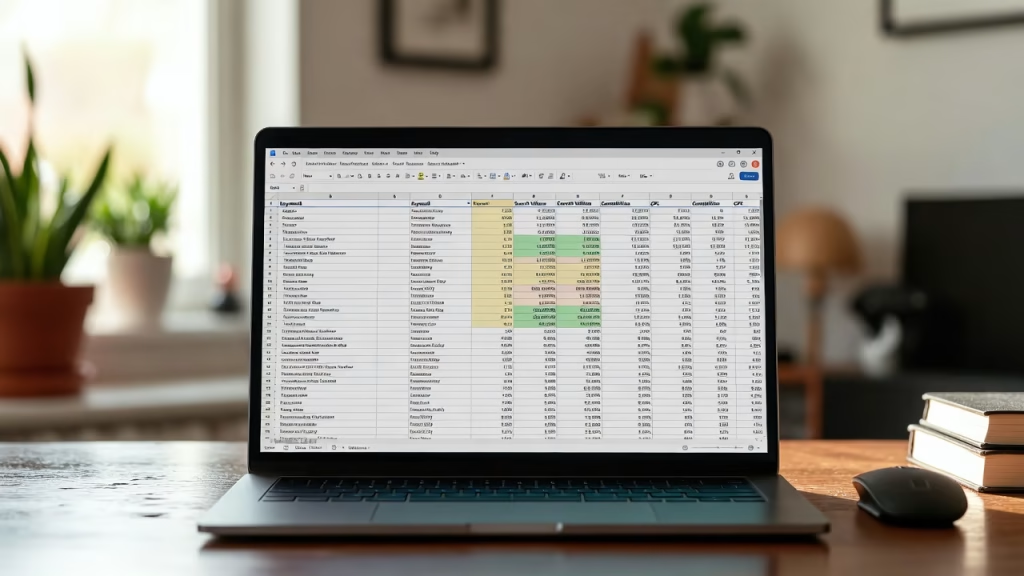
Importance of Keyword Research for E-Commerce
Keyword research forms the foundation of every successful SEO campaign.
Identifying Search Intent for Product Queries
Search intent helps determine what users are actually looking for. In e-commerce, queries usually fall into four categories:
| Search Intent | Example |
|---|---|
| Informational | Best running shoes |
| Navigational | Nike official store |
| Commercial | Best wireless headphones 2026 |
| Transactional | Buy gaming laptop online |
A freelancer specializing in freelance seo e-commerce focuses mainly on commercial and transactional keywords. These keywords often generate the highest revenue.
Tools Used by Freelance SEO Experts
Freelance SEO experts rely on a wide range of specialized tools to perform research, analyze website performance, identify optimization opportunities, and track results. These tools help freelancers make data-driven decisions instead of guessing what might work. In the highly competitive world of e-commerce SEO, the right tools allow professionals to uncover valuable insights about keywords, competitors, technical issues, and user behavior.
Below are the most important categories of tools that freelance SEO experts commonly use.
Keyword Research Tools
Keyword research tools help SEO professionals discover what potential customers are searching for in search engines. Understanding search demand and user intent is essential for optimizing product pages, category pages, and blog content.
Popular keyword research tools include:
- Google Keyword Planner – A free tool that provides keyword ideas, search volume data, and competition insights. It’s widely used to identify commercial keywords related to products and services.
- Ahrefs Keywords Explorer – Offers deep insights such as keyword difficulty, click potential, and related search queries. It also helps discover long-tail keywords that can drive targeted traffic.
- SEMrush Keyword Magic Tool – Known for its massive keyword database and advanced filtering options. Freelancers often use it to build complete keyword strategies for e-commerce sites.
- Ubersuggest – A beginner-friendly tool that provides keyword suggestions, search trends, and competitor keyword data.
These tools help freelancers identify keywords that align with search intent, ensuring content matches what users actually want.
Technical SEO Audit Tools
Technical SEO tools analyze a website’s infrastructure and identify issues that may prevent search engines from crawling or indexing pages properly.
Freelancers use these tools to detect problems such as:
- Broken links
- Duplicate content
- Crawl errors
- Missing meta tags
- Slow-loading pages
- Improper redirects
Common tools include:
- Screaming Frog SEO Spider – A powerful website crawler that scans entire websites and reveals technical SEO issues. It helps analyze metadata, internal linking, and page structure.
- Sitebulb – Known for visual SEO reports that make technical problems easier to understand.
- Google Search Console – Provides direct insights from Google, including indexing status, crawl errors, and search performance data.
Technical audits ensure that a website is optimized for search engine bots, which improves indexing and ranking potential.
Backlink Analysis Tools
Backlinks are one of the strongest ranking factors in SEO. Freelancers use backlink analysis tools to evaluate a website’s link profile and find opportunities to build new links.
Key tools include:
- Ahrefs Site Explorer – One of the most powerful backlink analysis platforms. It shows referring domains, anchor text distribution, and competitor backlinks.
- Majestic SEO – Provides detailed link metrics such as Trust Flow and Citation Flow to evaluate link quality.
- Moz Link Explorer – Helps identify domain authority and discover link-building opportunities.
By analyzing backlinks, freelancers can identify harmful links, track link-building progress, and study competitors’ strategies.
Competitor Analysis Tools
Understanding competitor strategies is essential for building a successful SEO campaign. Freelancers analyze competitor websites to see which keywords they rank for, which content performs best, and where they earn backlinks.
Popular tools for competitor research include:
- SEMrush Competitive Research Toolkit
- Ahrefs Competitive Analysis Features
- SimilarWeb Traffic Insights
These tools help freelancers identify content gaps, keyword opportunities, and link-building prospects that competitors are already benefiting from.
Content Optimization Tools
Content plays a major role in SEO, especially for e-commerce blogs and product pages. Freelancers use content optimization tools to ensure their pages align with search engine algorithms and user expectations.
Common tools include:
- Surfer SEO – Analyzes top-ranking pages and provides recommendations for content structure, keywords, and length.
- Clearscope – Helps optimize content by suggesting relevant keywords and improving topical relevance.
- Frase – Assists with content research, outline generation, and optimization based on search intent.
These tools help freelancers create content that is both user-friendly and search-engine optimized.
Analytics and Performance Tracking Tools
SEO success must be measured through data. Freelancers rely on analytics tools to track traffic growth, user behavior, and conversion performance.
Essential analytics tools include:
- Google Analytics – Tracks user activity, traffic sources, and conversion rates.
- Google Search Console – Monitors keyword rankings, impressions, click-through rates, and indexing issues.
- Looker Studio (formerly Google Data Studio) – Used to create visual reports that combine data from multiple platforms.
With these tools, freelancers can evaluate whether their strategies are increasing traffic, improving engagement, and generating sales.
Site Speed and Performance Tools
Website speed directly affects both SEO rankings and user experience. Slow websites often lead to higher bounce rates and lower conversions.
Freelancers use performance tools such as:
- Google PageSpeed Insights – Measures page loading speed and provides optimization suggestions.
- GTmetrix – Offers detailed reports on loading performance and page structure.
- WebPageTest – Provides advanced speed testing from different locations around the world.
Improving site speed can significantly enhance both search rankings and customer satisfaction.
Rank Tracking Tools
Rank tracking tools allow freelancers to monitor how a website’s keywords perform in search engine results over time.
Popular options include:
- SEMrush Position Tracking
- Ahrefs Rank Tracker
- SERPWatcher by Mangools
These tools help freelancers understand which strategies are working and which keywords need further optimization.
Why Tools Are Essential for Freelance SEO Experts
SEO tools provide insights that would otherwise take hundreds of hours to gather manually. By combining keyword research, technical analysis, backlink monitoring, and performance tracking, freelance SEO professionals can create strategies that deliver measurable results.
For e-commerce businesses, these tools help identify opportunities to optimize product pages, improve search rankings, and ultimately increase sales. When used effectively, SEO tools transform raw data into actionable strategies that drive sustainable online growth.

Product Optimization Strategies
Product pages generate the majority of revenue for e-commerce websites. Optimizing them correctly can significantly increase organic traffic.
Writing SEO-Friendly Product Descriptions
Effective product descriptions should:
- Include primary keywords naturally
- Highlight product benefits
- Answer common customer questions
- Include structured headings
Avoid copying manufacturer descriptions. Duplicate content can harm rankings.
Optimizing Images and Alt Text
Search engines cannot “see” images, so they rely on alt text.
Best practices include:
- Descriptive file names
- Compressed images for faster loading
- Keyword-relevant alt tags
Image optimization also improves site speed, which is an important ranking factor.
Category Pages Optimization
Category pages often rank better than individual products because they target broader keywords.
Structuring Category Pages for Search Engines
A well-optimized category page should include:
- Introductory SEO text
- Keyword-rich headings
- Filter options
- Clear navigation
Proper structure helps search engines understand the hierarchy of your site.
Internal Linking Best Practices
Internal links distribute ranking power across the website.
Key strategies include:
- Linking products to category pages
- Linking blogs to relevant products
- Using descriptive anchor text
Internal linking also improves user navigation and engagement.
Technical Audit and Site Health
Technical SEO ensures search engines can crawl and index your site correctly.
Detecting Crawl Errors
Crawl errors occur when search engines cannot access certain pages.
Common issues include:
- Broken links
- Redirect loops
- Missing pages
- Incorrect robots.txt settings
Freelancers perform regular audits to fix these issues quickly.
Improving Site Architecture
Good site architecture helps both users and search engines.
A strong structure typically follows this hierarchy:
Home → Category → Subcategory → Product
This approach improves crawlability and indexation.
Site Speed and Mobile Responsive Design
Website speed and mobile usability directly affect rankings and conversions.
Why Site Speed Impacts Rankings
Slow websites frustrate users and increase bounce rates.
Optimizing site speed involves:
- Image compression
- Browser caching
- Content delivery networks
- Optimized code
Search engines prioritize fast-loading pages because they deliver better user experiences.
Mobile Optimization for Better User Experience
Most online shopping now happens on mobile devices.
A mobile-friendly store should include:
- Responsive layouts
- Fast loading pages
- Simple navigation
- Mobile checkout optimization
Content Strategy for E-Commerce Growth
Content marketing is often overlooked in e-commerce SEO.
Blog Content That Drives Organic Traffic
Blog posts can attract informational search traffic.
Examples include:
- Product guides
- Buying guides
- Comparison articles
- Tutorials
These pages can rank for long-tail keywords and bring new visitors to the store.
Search Intent Based Content Planning
Content should match user intent at each stage of the buying journey.
For example:
Awareness → Blog articles
Consideration → Product comparisons
Decision → Product pages
Conversion Rate Optimization
SEO traffic alone is not enough. Conversions determine real success.
Improving Product Page Conversions
High-converting product pages usually include:
- Clear product images
- Customer reviews
- Trust badges
- Strong calls-to-action
These elements increase user trust.
Enhancing User Experience
User experience affects both SEO rankings and conversions.
Important UX factors include:
- Fast loading pages
- Easy navigation
- Clear product information
- Simple checkout process
Schema Markup and Structured Data
Schema markup helps search engines understand page content.
Product Schema Benefits
Product schema can display:
- Price
- Ratings
- Availability
- Reviews
This information appears directly in search results.
Rich Snippets and Visibility
Rich snippets increase click-through rates because they make listings more visually appealing.
Link Building for Online Stores
Backlinks remain one of the most important ranking factors.
Backlink Analysis Techniques
Freelancers analyze competitor backlinks to identify opportunities.
This process includes:
- Reviewing referring domains
- Identifying high-authority sites
- Finding link gaps
Authority Building Strategies
Effective link building strategies include:
- Guest blogging
- Influencer outreach
- Digital PR campaigns
- Resource link placements
Google Shopping and SEO Integration
Google Shopping allows e-commerce stores to appear in product listings directly within search results.
Optimizing Product Feeds
Product feeds must include:
- Accurate titles
- Optimized descriptions
- Correct pricing
- High-quality images
Well-optimized feeds improve visibility and click-through rates.
Competitor Analysis for Market Advantage
Competitor analysis reveals opportunities for growth.
Discovering Competitor Keywords
Freelancers identify keywords competitors rank for but the client does not.
These gaps often provide quick ranking opportunities.
Analytics Tracking and Performance Monitoring
SEO without measurement is ineffective.
Measuring SEO Success
Important metrics include:
- Organic traffic
- Keyword rankings
- Conversion rate
- Revenue from organic search
Tools like Google Analytics and Search Console help monitor these metrics.
Local Listings for E-Commerce Brands
Some e-commerce businesses also have physical locations.
Local SEO for Hybrid Stores
Local listings help attract nearby customers.
Important actions include:
- Optimizing Google Business Profile
- Adding accurate NAP information
- Managing customer reviews
Future Trends in Freelance Technical SEO
SEO continues evolving rapidly.
Emerging trends include:
- AI-driven search algorithms
- Voice search optimization
- Visual search
- Advanced structured data
- Improved mobile experiences
Freelancers who adapt to these trends will remain highly valuable for e-commerce businesses.
In a nutshall, the success of an online store depends heavily on visibility in search engines. A well-executed freelance seo e-commerce strategy combines keyword research, product optimization, technical SEO, and strong content marketing.
Freelancers bring flexibility, specialized knowledge, and cost-effective expertise that many businesses need to compete in crowded markets. By improving site speed, optimizing category pages, performing technical audits, and building high-quality backlinks, freelancers help online stores grow sustainably.
Businesses that invest in strong SEO strategies today will gain long-term traffic, stronger brand authority, and higher conversions tomorrow.
Frequently Asked Questions
What is freelance seo e-commerce?
Freelance SEO e-commerce refers to independent SEO professionals optimizing online stores to improve visibility, traffic, and sales through search engines.
Why is SEO important for e-commerce websites?
SEO helps online stores rank higher in search engines, attract organic traffic, and reduce reliance on paid advertising.
How long does e-commerce SEO take to show results?
Most SEO campaigns start showing results within 3–6 months depending on competition and website authority.
What does a freelance technical SEO expert do?
They analyze technical aspects such as crawl errors, site speed, schema markup, indexing issues, and website structure.
How does link building help e-commerce SEO?
Backlinks increase website authority, which helps improve rankings and organic traffic.
6. What are the best tools for freelance SEO specialists?
Popular tools include Ahrefs, SEMrush, Google Analytics, Google Search Console, and Screaming Frog.