Search engines drive the majority of website traffic on the internet today. Businesses compete fiercely to appear at the top of search rankings because visibility often translates directly into revenue. This is where an SEO Strategy Consultant Actually Do becomes incredibly valuable.
An SEO strategy consultant is a professional who develops and implements plans that improve a website’s visibility in search engines. Their work focuses on increasing organic traffic growth, improving SERP performance, optimizing content, analyzing backlinks, and performing technical audits.
Instead of relying on guesswork, these consultants use data-driven insights and proven strategies to help businesses attract the right audience. They focus on keyword research, content optimization, site architecture, and analytics reporting to build sustainable search engine growth.
Let’s explore the many responsibilities and skills involved in this role.
Introduction to SEO Strategy Consulting
SEO strategy consulting is more than just optimizing keywords or writing blog posts. It involves a comprehensive approach to improving a website’s performance in search engines.
An SEO consultant evaluates multiple elements of a website including technical structure, content quality, backlink profile, and user experience. Their goal is to align these components with search engine algorithms and user expectations.
Why Businesses Need SEO Strategy Experts?
Many companies struggle to grow their online presence because search engine optimization is complex and constantly changing. Algorithm updates, competition, and evolving user behavior make SEO a moving target. SEO strategy consultants help businesses:
- Identify opportunities for organic traffic growth
- Improve search rankings
- Increase conversion rate
- Strengthen site architecture
- Adapt to algorithm updates
By focusing on long-term strategies instead of short-term tactics, they create sustainable growth for businesses.
The Growing Importance of Organic Traffic
Organic traffic is often the most valuable traffic source for websites. Unlike paid advertising, organic visitors arrive naturally through search engines after finding relevant content. Benefits of organic traffic include:
- Lower customer acquisition costs
- Higher credibility and trust
- Long-term visibility
- Better audience targeting
An SEO strategy consultant focuses on maximizing this traffic source by optimizing content, improving technical performance, and analyzing search behavior.
Core Responsibilities of an SEO Strategy Consultant
An SEO consultant performs a wide range of tasks that contribute to overall website performance. Their work spans technical, analytical, and creative areas.
Strategic SEO Planning
A successful SEO campaign begins with a detailed strategy. Consultants analyze the business, target audience, competitors, and market trends to develop a customized plan.
Strategic planning involves:
- Defining target keywords
- Identifying content gaps
- Creating optimization roadmaps
- Establishing measurable goals
This strategic approach ensures that SEO efforts align with business objectives.
Aligning SEO with Business Goals
SEO is most effective when it supports broader marketing and business goals. Consultants work closely with marketing teams, content creators, and developers to ensure alignment.
For example, if a business wants to increase product sales, the SEO strategy may focus on optimizing product pages, improving conversion rates, and targeting high-intent keywords.
Keyword Research and Search Intent Analysis
Keyword research is one of the most critical responsibilities of an SEO strategy consultant.
Identifying High-Value Keywords
Consultants identify keywords that balance search volume, competition, and relevance. They use tools and data analysis to uncover opportunities that competitors may have overlooked. These keywords help guide content creation and optimization.
Common keyword categories include:
- Informational keywords
- Transactional keywords
- Navigational keywords
- Long-tail keywords
By targeting the right keywords, businesses can attract users who are actively searching for their products or services.
Understanding User Intent
Modern SEO focuses heavily on user intent. Search engines aim to deliver results that match what users truly want. SEO consultants analyze queries to determine whether users are:
- Seeking information
- Comparing options
- Ready to make a purchase
Understanding this intent helps shape content strategies that satisfy both users and search engines.
Content Optimization for Higher Rankings
Content remains one of the strongest ranking factors in search engines. SEO consultants work closely with content teams to ensure every piece of content performs well.
Improving On-Page Factors
On-page SEO includes optimizing elements directly within a webpage. Important on-page factors include:
- Title tags
- Header tags
- Internal links
- Keyword placement
- Image optimization
These elements help search engines understand what the page is about and determine its relevance to user queries.
Crafting Optimized Meta Descriptions
Meta descriptions play a key role in click-through rates. While they may not directly influence rankings, they strongly affect whether users click on a search result.
An effective meta description:
- Clearly explains the page content
- Includes relevant keywords
- Encourages users to click
When optimized correctly, these small snippets can significantly improve search traffic.
Technical SEO Audits and Website Health
Technical SEO ensures that search engines can properly crawl, index, and understand a website.
Core Web Vitals and Mobile Optimization
Google emphasizes user experience through Core Web Vitals, which measure:
- Loading speed
- Interactivity
- Visual stability
SEO consultants analyze these metrics and work with developers to improve them. They also ensure websites perform well on mobile devices, as mobile optimization is essential for modern SEO.
Site Architecture and Crawlability
A well-structured website helps both users and search engines navigate content easily. SEO consultants improve site architecture by:
- Creating logical navigation structures
- Implementing internal linking strategies
- Optimizing URL structures
- Adding schema markup
These improvements enhance crawlability and increase the chances of ranking higher.
Link Building and Backlink Analysis
Backlinks remain one of the most influential ranking factors in SEO.
Building High-Quality Backlinks
SEO consultants develop strategies to acquire links from authoritative websites. These links signal trust and credibility to search engines.
Common link-building strategies include:
- Guest blogging
- Digital PR
- Content outreach
- Partnerships and collaborations
Quality matters far more than quantity when it comes to backlinks.
Evaluating Link Profiles
Backlink analysis helps consultants identify harmful or low-quality links that could damage rankings.
By analyzing link profiles, they can:
- Remove toxic backlinks
- Strengthen link diversity
- Identify new opportunities
Competitive Analysis and SERP Performance
Understanding competitors is essential for building effective SEO strategies.
Studying Competitor Strategies
SEO consultants analyze competitors’ websites to discover:
- Top-performing content
- Keyword targeting strategies
- Backlink sources
- Content gaps
This insight allows businesses to refine their strategies and gain a competitive advantage.
Identifying Ranking Opportunities
SERP analysis reveals opportunities where competitors are weak or where search demand is high.
Consultants may identify:
- Underserved keywords
- Featured snippet opportunities
- Content improvements
- New content topics
These insights help businesses capture additional traffic.
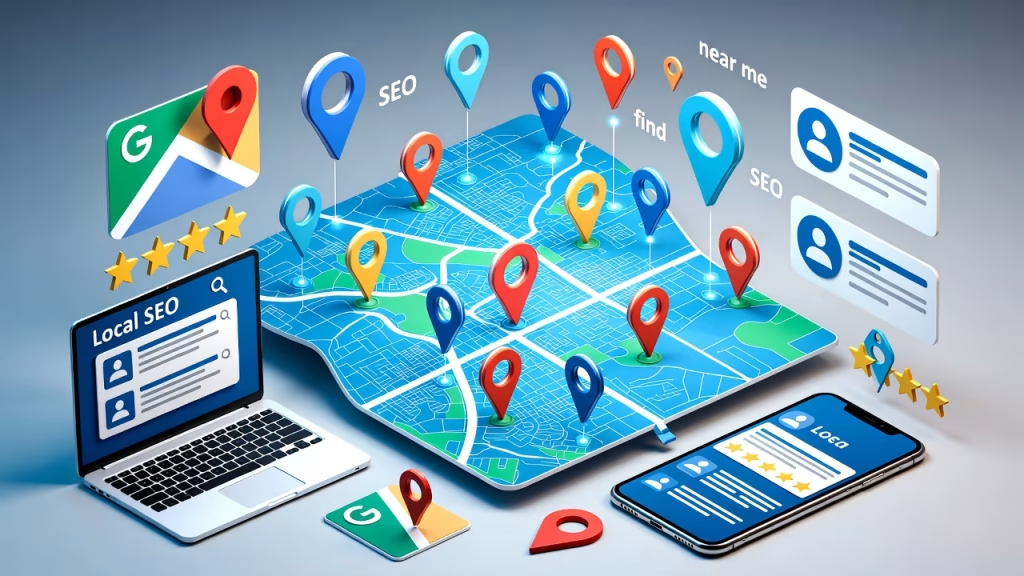
Local SEO and Local Listings Management
Local SEO and Local Listings Management play a critical role for businesses that serve customers in specific geographic areas. While traditional SEO focuses on improving global search visibility, local SEO targets users who are searching for products or services near their location. These searches often include phrases like “near me,” “in my city,” or “best service nearby.”
An SEO strategy consultant helps businesses optimize their digital presence so they appear prominently in local search results, map listings, and local business directories. When implemented correctly, local SEO can significantly improve organic traffic growth, increase store visits, and generate more qualified leads.
Local searches also have strong purchase intent. Studies consistently show that users searching for local businesses are often ready to take action whether calling a company, requesting a quote, or visiting a physical location. Because of this high intent, ranking well in local results can dramatically improve a business’s conversion rate.
Understanding How Local Search Works
Search engines use different ranking signals for local results compared to traditional search rankings. Local search algorithms evaluate three primary factors:
- Relevance – How closely a business matches a user’s search query.
- Distance – How close the business is to the searcher’s location.
- Prominence – How well-known or authoritative the business is online.
An SEO strategy consultant optimizes each of these factors to improve a business’s chances of appearing in the Local Pack, which is the group of map results typically displayed at the top of local search results.
Local search results often include:
- Business name and category
- Ratings and customer reviews
- Business hours
- Phone number
- Directions through map integrations
These results are highly visible and often attract the majority of clicks for location-based searches.
Optimizing Google Business Profiles
One of the most important tasks in local SEO is optimizing a company’s Google Business Profile (formerly Google My Business). This listing directly influences visibility in Google Maps and local search results.
An SEO strategy consultant ensures that the profile is fully optimized by completing and maintaining key elements such as:
- Accurate business name
- Physical address
- Phone number
- Website link
- Business category
- Operating hours
- Service descriptions
Consistency across these details is crucial. Even small discrepancies in business information can confuse search engines and negatively affect local rankings.
Consultants also enhance profiles by adding:
- High-quality photos of the business
- Service descriptions and product listings
- Frequently asked questions
- Regular updates and posts
These enhancements increase engagement and improve the credibility of the listing.
Managing Local Listings Across Directories
Local listings extend beyond Google. Businesses often appear on many online directories and review platforms. These listings contribute to a business’s overall local authority and visibility.
Common directories include:
- Business directories
- Industry-specific platforms
- Local community websites
- Map and navigation services
SEO consultants perform local listings management to ensure consistent information across all these platforms. This includes verifying that the Name, Address, and Phone Number (NAP) details are identical everywhere.
Consistency strengthens search engine trust and helps confirm the legitimacy of a business location.
If inconsistent listings are found, consultants correct them to prevent confusion and ranking issues.
Importance of Customer Reviews in Local SEO
Customer reviews are one of the strongest ranking factors in local SEO. Positive reviews signal credibility and trustworthiness to both search engines and potential customers.
SEO strategy consultants help businesses develop strategies to encourage satisfied customers to leave reviews. This may involve:
- Email follow-ups after purchases
- QR codes linking to review pages
- Incentivized feedback requests
- Customer service improvements
However, simply collecting reviews isn’t enough. Consultants also advise businesses on responding to reviews—both positive and negative.
Responding professionally to reviews demonstrates engagement and customer care, which can improve brand perception and influence search rankings.
Local Keyword Optimization
Local SEO relies heavily on location-specific keywords. Instead of targeting broad search terms, consultants focus on keywords that combine services with geographic modifiers.
Examples include:
- “Dentist in Chicago”
- “Best coffee shop in London”
- “Emergency plumber near me”
An SEO strategy consultant performs keyword research to identify these location-based opportunities. They then incorporate these keywords into website content, headings, and metadata.
Important areas for local keyword placement include:
- Page titles and headers
- Meta descriptions
- Service pages
- Blog content
- Local landing pages
Optimizing for these keywords helps search engines understand where the business operates and which searches it should appear in.
Creating Localized Content
Localized content plays a significant role in strengthening local SEO signals. SEO consultants often recommend creating content that connects the business to the surrounding community.
Examples of localized content include:
- City-specific service pages
- Local event coverage
- Community involvement updates
- Regional industry news
- Customer success stories from local clients
This type of content signals geographic relevance and can improve search visibility for location-based queries.
Additionally, localized content helps build stronger connections with local audiences, increasing engagement and trust.
Optimizing Website Structure for Local SEO
Website structure also influences local search visibility. Consultants ensure that site architecture supports local optimization by creating dedicated pages for specific service areas.
For example, a business serving multiple cities might create pages such as:
- /plumbing-services-new-york
- /plumbing-services-brooklyn
- /plumbing-services-queens
Each page is optimized with unique content tailored to that location.
This approach allows businesses to target multiple local markets while maintaining clear site architecture and avoiding duplicate content issues.
Mobile Optimization for Local Searches
A large percentage of local searches happen on mobile devices. Users often search for nearby businesses while traveling, shopping, or exploring their surroundings.
Because of this, mobile optimization is essential for successful local SEO.
SEO consultants ensure that websites:
- Load quickly on mobile devices
- Use responsive design
- Display clear contact information
- Offer easy navigation
- Include clickable phone numbers
Fast mobile experiences also improve Core Web Vitals, which contribute to overall search rankings.
Schema Markup for Local Businesses
Structured data, also known as schema markup, helps search engines understand specific details about a business.
Local business schema can include information such as:
- Business type
- Address and location coordinates
- Opening hours
- Reviews and ratings
- Contact information
Implementing schema markup can enhance search listings with rich results, making them more visible and attractive to users.
SEO consultants work with developers to integrate schema markup properly into a website’s code.
Tracking Local SEO Performance
Local SEO strategies must be continuously monitored to ensure effectiveness. SEO consultants track performance using various analytics tools.
Key metrics include:
- Local keyword rankings
- Google Maps visibility
- Website traffic from local searches
- Clicks from local listings
- Phone calls and direction requests
This data provides insight into how users interact with local search results and helps consultants refine strategies over time.
Regular analytics reporting allows businesses to measure progress and understand the impact of their local SEO efforts.
Competitive Analysis in Local Markets
Local markets often have intense competition, especially in industries like restaurants, healthcare, home services, and retail.
SEO consultants conduct competitive analysis to identify strategies used by top-ranking competitors.
This analysis includes:
- Reviewing competitor local listings
- Studying backlink sources
- Evaluating keyword strategies
- Examining customer review patterns
By identifying competitor strengths and weaknesses, consultants uncover opportunities for improving local visibility.
Why Local SEO Is Essential for Modern Businesses?
Local SEO has become increasingly important as search engines prioritize personalized and location-based results. Businesses that ignore local optimization risk losing visibility to competitors who invest in these strategies.
An effective local SEO strategy can deliver numerous benefits:
- Increased visibility in map results
- Higher website traffic from nearby customers
- Improved brand credibility
- Stronger community engagement
- Higher conversion rates from high-intent searches
Because local searches often indicate immediate needs, businesses appearing at the top of these results are more likely to attract ready-to-buy customers.
The Role of an SEO Strategy Consultant in Local Growth
Managing local SEO requires expertise in technical optimization, content strategy, keyword research, and data analysis. An SEO strategy consultant brings these skills together to create a comprehensive plan that strengthens a business’s local presence.
By optimizing local listings, improving location-based content, managing customer reviews, and ensuring consistent business information across directories, consultants help businesses dominate local search results.
Ultimately, strong Local SEO and Local Listings Management strategies allow businesses to connect with nearby customers at the exact moment they are searching for relevant services making it one of the most powerful digital marketing tools available today.

Analytics Reporting and Performance Tracking
Data plays a crucial role in SEO strategy.
Monitoring Organic Traffic Growth
Consultants track traffic using analytics tools to measure:
- Visitor behavior
- Keyword performance
- Page engagement
- Traffic sources
These insights help identify which strategies are working.
Measuring Conversion Rate Improvements
SEO success isn’t just about traffic, it’s about results.
Consultants measure:
- Leads generated
- Sales conversions
- Engagement metrics
- Revenue impact
Improving conversion rate ensures that increased traffic leads to tangible business outcomes.
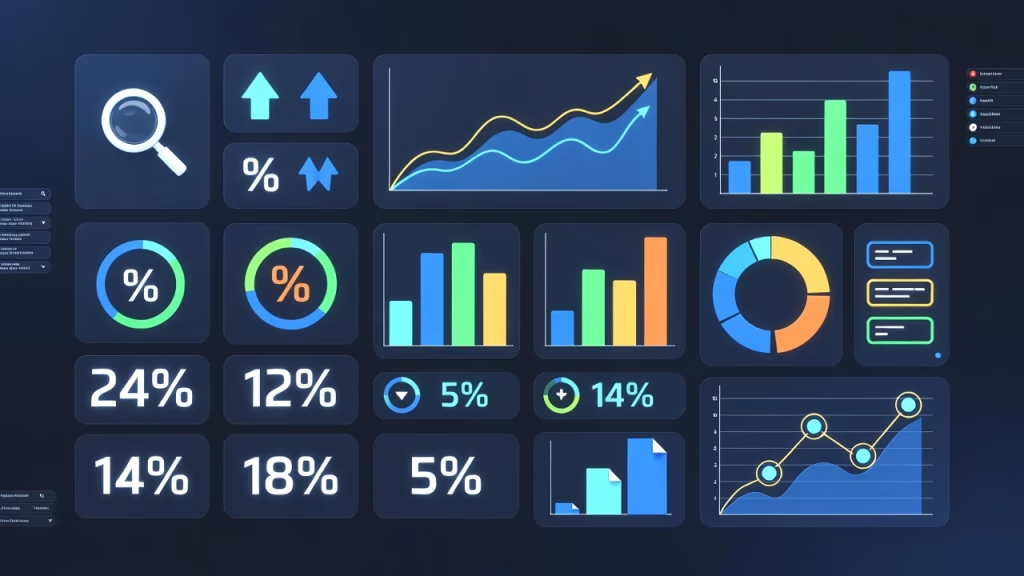
Adapting to Algorithm Updates
Search engines especially Google constantly refine their algorithms to improve the quality of search results. These updates aim to deliver the most relevant, trustworthy, and user-friendly content to searchers. For businesses relying on organic visibility, adapting to algorithm updates is a critical responsibility of an SEO strategy consultant.
An experienced consultant doesn’t simply react when rankings drop. Instead, they proactively monitor search engine trends, anticipate updates, and implement strategies that align with long-term best practices. By focusing on sustainable optimization rather than short-term tricks, they help websites remain resilient even when major updates occur.
Algorithm changes can affect various aspects of SEO including content relevance, backlink quality, page experience, and search intent matching. Therefore, adapting effectively requires a deep understanding of how search engines evaluate websites.
Understanding How Search Engine Algorithms Work
Search engine algorithms use hundreds of ranking factors to determine which pages should appear at the top of search results. These factors include:
- Content quality and relevance
- Keyword targeting and user intent
- Page experience and Core Web Vitals
- Website authority through backlinks
- Technical performance and mobile optimization
Algorithm updates refine how these factors are evaluated. Some updates focus on content quality, while others target spam, link manipulation, or user experience.
SEO consultants study patterns in search ranking fluctuations to understand how algorithm changes affect websites. By analyzing these patterns, they can determine whether ranking changes are related to content quality, link signals, or technical issues.
Major Types of Google Algorithm Updates
Algorithm updates typically fall into several categories. Understanding each type helps SEO consultants adjust strategies effectively.
1. Core Updates
Core updates are broad changes that affect how Google evaluates content across the web. They can significantly impact search rankings.
During a core update, Google reassesses how it determines:
- Content relevance
- Authority and trust signals
- Search intent satisfaction
SEO consultants often respond by improving content depth, accuracy, and expertise rather than making superficial changes.
2. Helpful Content Updates
Helpful Content Updates prioritize content that genuinely helps users rather than content created primarily for search rankings.
These updates target:
- Thin or low-quality content
- Over-optimized pages written only for keywords
- Content that lacks real expertise or value
SEO consultants adapt by focusing on E-E-A-T (Experience, Expertise, Authority, Trustworthiness) principles. They ensure content answers real questions, provides actionable insights, and demonstrates credibility.
3. Spam and Link Updates
Spam updates target manipulative SEO tactics, especially unnatural link building.
Examples of risky practices include:
- Buying backlinks
- Excessive link exchanges
- Low-quality directory submissions
When Google identifies these patterns, websites may experience ranking drops. SEO consultants conduct backlink analysis to identify and remove toxic links while focusing on earning high-quality backlinks through legitimate outreach and digital PR.
4. Page Experience Updates
Google increasingly prioritizes user experience signals. These include:
- Page load speed
- Mobile usability
- Visual stability
- Secure browsing
Metrics known as Core Web Vitals measure these elements. If a website performs poorly in these areas, it may lose rankings even if the content is strong.
SEO consultants collaborate with developers to improve page performance, optimize images, reduce code bloat, and ensure mobile responsiveness.
Monitoring Algorithm Updates
One of the most important responsibilities of an SEO strategy consultant is tracking algorithm changes as they happen.
They monitor multiple sources including:
- Official announcements from Google
- SEO industry publications
- Ranking volatility tracking tools
- Website analytics data
If a sudden ranking shift occurs across many websites, consultants investigate whether an algorithm update may be responsible.
Monitoring allows them to quickly diagnose ranking changes and recommend adjustments.
Identifying the Impact of an Algorithm Update
When rankings fluctuate after an update, consultants perform detailed analysis to determine the cause.
This process typically includes:
- Traffic Analysis
Reviewing organic traffic patterns to identify affected pages. - Keyword Ranking Analysis
Checking which keywords lost or gained rankings. - Content Evaluation
Assessing whether affected pages provide comprehensive and valuable information. - Technical Performance Review
Examining site speed, crawl errors, and mobile performance. - Backlink Profile Review
Identifying harmful links that may trigger penalties.
Through this process, consultants pinpoint the root cause of ranking changes and develop a recovery plan.
Strategies for Recovering from Algorithm Updates
When an algorithm update negatively impacts a website, recovery requires strategic improvements rather than quick fixes.
Common recovery strategies include:
Improving Content Quality
Consultants expand and refine content to ensure it fully addresses user needs. This may include:
- Adding deeper explanations
- Including expert insights
- Updating outdated information
- Improving readability and structure
High-quality content signals authority and trustworthiness to search engines.
Strengthening Topical Authority
Search engines favor websites that demonstrate expertise in specific topics. SEO consultants build topical authority by creating interconnected content clusters around key subjects.
For example, instead of publishing isolated articles, they develop comprehensive topic hubs that cover multiple related subtopics.
Enhancing Technical SEO
Technical improvements can help websites regain lost rankings. Consultants may optimize:
- Website speed
- Mobile responsiveness
- Internal linking structure
- Structured data (schema markup)
These improvements help search engines crawl and understand the website more efficiently.
Cleaning Up Backlink Profiles
If spammy backlinks contributed to ranking losses, consultants remove or disavow harmful links.
They also focus on acquiring authoritative backlinks through:
- Guest contributions
- Industry partnerships
- Media coverage
- High-value content assets
Quality backlinks help rebuild search engine trust.
Preventing Future Algorithm Risks
Rather than constantly reacting to algorithm updates, SEO consultants aim to future-proof websites by following sustainable SEO practices.
Key principles include:
Focus on user value
Content should prioritize helping users rather than manipulating rankings.
Avoid manipulative tactics
Black-hat SEO techniques often lead to penalties when algorithms evolve.
Invest in technical performance
Fast, mobile-friendly websites are less vulnerable to ranking losses.
Build strong brand authority
Trusted brands with high-quality content tend to perform better after algorithm updates.
By focusing on these principles, consultants reduce the likelihood of severe ranking disruptions.
The Importance of Continuous SEO Optimization
Algorithm updates reinforce an important reality: SEO is never finished. Search engines continuously refine their ranking systems, meaning websites must evolve alongside them.
SEO strategy consultants treat optimization as an ongoing process that involves:
- Updating old content
- Monitoring analytics and rankings
- Refining keyword strategies
- Improving user experience
This continuous improvement approach ensures long-term visibility and stability in search rankings.
Why Algorithm Adaptation Defines Successful SEO
Adapting to algorithm updates is one of the defining skills of an effective SEO strategy consultant. Instead of chasing quick wins, they focus on building strong foundations that withstand changes in search engine algorithms.
By prioritizing quality content, technical excellence, and user-focused optimization, they help businesses maintain consistent organic traffic growth even in a constantly evolving search landscape.
In the long run, websites that align with search engine goals delivering valuable and trustworthy information to users are the ones that thrive regardless of algorithm changes.
FAQs About SEO Strategy Consultants
What does an SEO strategy consultant actually do?
They develop and implement strategies that improve a website’s visibility in search engines through keyword research, content optimization, technical audits, and link building.
How long does SEO take to show results?
SEO typically takes three to six months to show noticeable results, although the timeline depends on competition and website quality.
Is hiring an SEO consultant worth it?
Yes. An experienced consultant can help businesses achieve sustainable organic traffic growth and improve online visibility.
What tools do SEO consultants use?
Common tools include Google Analytics, Search Console, Ahrefs, SEMrush, and Screaming Frog.
How is SEO different from paid advertising?
SEO focuses on organic search results, while paid advertising involves paying for placements in search engine results.
Can small businesses benefit from SEO consulting?
Absolutely. SEO can help small businesses compete with larger companies by targeting niche keywords and local searches.
Finally, an SEO strategy consultant plays a crucial role in helping businesses succeed online. By combining technical expertise, data analysis, and creative content strategies, they improve search rankings and drive meaningful organic traffic growth.
From conducting keyword research and technical audits to improving on-page factors, backlink analysis, and analytics reporting, their work touches every aspect of search optimization.
As search engines continue evolving, businesses that invest in expert SEO strategies will remain competitive in the digital marketplace.